2026 Guide Explains How to Choose Artificial Marble Wall Panels
Linyi, Shandong, China – October 16, 2026
So you’re choosing Artificial Marble Wall Panels for 2026? It’s not just about matching colors to a bathroom or hotel lobby. The choice actually touches moisture control, cleaning time, indoor air quality, and long-term maintenance. Grand View Research’s recent wall panels market analysis points to renovation activity, faster installation, and demand for decorative surfaces as big growth drivers. But market growth alone doesn’t prove product quality. Buyers still need specs they can verify.Start with where the panels will go. In shower areas, look closely at water absorption, joint design, substrate stability, and edge sealing. For kitchens and commercial corridors, compare stain resistance, scratch performance, fire behavior, and cleaning compatibility. ASTM E84 testing can help you evaluate surface burning characteristics, and ISO 16000 guidance can support smarter indoor-air-quality assessments. Ask suppliers for current test reports, not just pretty brochures. It’s a small step, but it can save you from expensive surprises.Surface look matters too. Realistic veining should stay consistent across adjacent sheets, though a little variation can actually make the stone effect feel more natural. Check a full-size sample under both warm and cool lighting. Uv Marble Sheet Pvc Wall Panels may offer lightweight handling and quick installation, but buyers should still check UV stability, PVC composition, adhesive compatibility, and recycling information. And that word “waterproof”? It needs scrutiny too. Poorly sealed joints can still let moisture sneak behind the panel.Reliable manufacturers publish batch numbers, care instructions, warranty terms, and installation limits. Independent testing adds confidence. Still, no panel is truly maintenance-free. Yeah, it’s worth admitting. A professional choice balances design, verified performance, installation skill, and lifecycle cost, rather than relying on showroom looks alone.
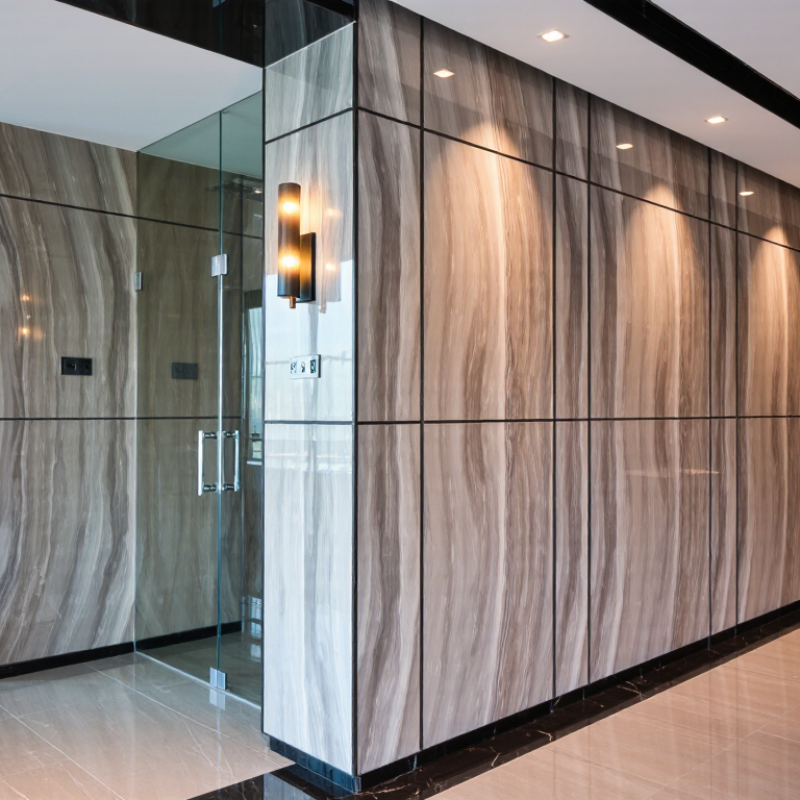 Define Artificial Marble Panels: Resin, Mineral Fillers, and 3–12 mm Thickness
Artificial marble wall panels are engineered surfaces, not solid stone. Their core usually combines polymer resin, mineral fillers, pigments, and additives. Resin binds the mixture and improves flexibility. Mineral fillers add weight, hardness, and a stone-like appearance.Panel thickness commonly ranges from 3 to 12 mm. A 3 mm panel suits lightweight decorative overlays on stable, flat walls. Thicker 6–8 mm panels feel more substantial and resist minor handling damage. Panels near 12 mm offer greater rigidity, but they require stronger support and more careful cutting. Thickness alone does not prove quality. Check density, backing strength, surface consistency, and dimensional stability.In practical installations, I inspect the wall before choosing the panel. Uneven plaster can telegraph through thin sheets like shadows under fabric. Moisture also matters, especially in bathrooms and commercial wash areas. Ask for technical data, installation limits, cleaning guidance, and a physical sample. An Uv Marble Pvc Wall Panels Sheet may look similar, but its PVC structure can differ from resin-mineral artificial marble. Do not compare them by appearance alone. I once underestimated the effect of strong side lighting; a subtle pattern then looked uneven after installation. Sample testing remains worthwhile. Small details matter.
Compare Mineral-Filler Ratios, Density, and Dimensional Tolerance in mm
When choosing artificial marble wall panels, check the mineral-filler ratio before admiring the surface. Technical literature on engineered stone commonly reports 60–75% calcium carbonate or silica filler by mass. Higher filler content can improve stiffness and reduce resin shrinkage. It may also increase brittleness. Ask for a tested formulation, not a sales estimate.Density gives a useful reality check. EN 14617-1 specifies density and water-absorption testing for agglomerated stone products. Many interior panels measure about 1.8–2.3 g/cm³, depending on filler type and resin content. A 2023 Construction and Building Materials study reported similar ranges for polymer-based stone composites. Compare the laboratory value with a site sample. Small differences matter. A light panel can hide more resin or internal voids.Dimensional tolerance should be written in millimetres. For a 600 mm panel, a practical purchasing target might be ±0.5 mm in length and width, with thickness controlled within ±0.3 mm. These figures are project specifications, not universal legal limits. Verify them against ISO 1183-1 density testing and ASTM D2584 filler-content testing. Measure three points along each edge using a calibrated calliper. Corners often reveal problems first. I have seen attractive panels fail during dry fitting because thickness varied near the cutout. The assumption was wrong. Ask for batch data, moisture conditioning details, and inspection records before installation.
2026 How to Choose Artificial Marble Wall Panels?
Compare mineral-filler ratios, density, and dimensional tolerance in mm.
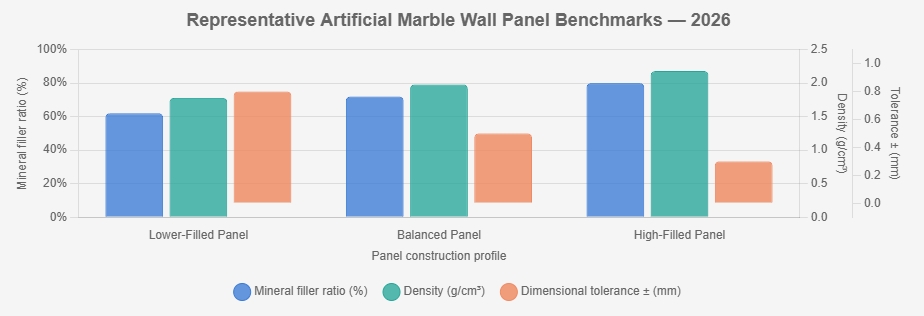
The chart presents representative engineering benchmarks for mineral-based artificial marble wall panels. Higher mineral-filler content generally increases mineral loading and panel weight, while density should be confirmed from the product test report. Dimensional tolerance is shown as the maximum positive or negative deviation in millimeters; lower values are preferable for large-format installation. Actual values vary with resin system, reinforcement, thickness, curing process, and applicable specifications.
Verify Water Absorption with ASTM C373 Test Results Near 0.5%
When choosing artificial marble wall panels in 2026, water absorption deserves close attention. Moisture can enter through cut edges, joints, or damaged surfaces. In bathrooms, kitchens, and humid commercial spaces, even small weaknesses may cause staining or swelling. A panel should look dense and consistent, not chalky around the edges. Low absorption matters.
Ask for ASTM C373 test results, preferably from an independent laboratory. Results near 0.5%indicate very limited water uptake under the tested conditions. Request the complete report, including sample preparation, conditioning, thickness, test date, and individual readings. The average alone can hide variation. Check the method carefully. Some artificial Marble Panels contain resin and mineral fillers, so the laboratory must confirm that ASTM C373 is suitable for the specific material.
Do not treat 0.5% as a waterproof guarantee.It is a laboratory result. Installation still controls real performance. I would inspect factory-cut edges, drilled openings, seams, and the wall substrate before approval. These areas often receive less attention. A single test batch may not represent every production run, either. Ask for recent results and quality records from multiple batches. This step may feel excessive, but replacement work costs more than careful verification. Surface appearance matters, yet hidden moisture resistance matters more.
Check Fire Ratings: ASTM E84 Class A or EN 13501-1 A2-s1,d0
When choosing Pvc Marble Wall Panels in 2026, fire performance should come before color, gloss, or veining. A realistic marble pattern cannot compensate for an unsuitable core.
ASTM E84 Class A indicates a flame spread index of 0–25 and a smoke-developed index of 0–450. However, these values apply to the tested product and installation setup. Thickness, substrate, adhesive, joints, and ventilation can change results. Do not treat Class A as “fireproof.” It is not.
EN 13501-1 A2-s1,d0 uses a different European classification system. A2 means limited contribution to fire, s1 means low smoke production, and d0 means no flaming droplets. These ratings are not direct equivalents to ASTM E84 Class A. Check the complete test report, not only a sales sheet. The report should identify the panel thickness, backing, fixing method, and test laboratory.
NFPA’s Structure Fires in the United States report estimated about 1.5 million fires in 2021. Interior materials deserve careful review, even in decorative spaces. In practice, I would request a current certificate and inspect the batch marking before installation. Small details matter.
Tips:Ask for ASTM E84 or EN 13501-1 documentation. Confirm the exact panel assembly. Reject vague claims such as “fire resistant” without test values. Also, review local building requirements with a qualified professional. A beautiful panel can still be the wrong panel.
Evaluate Wear and Stain Resistance Using ISO 10545-7 and 24-Hour Tests
Choosing Marble Wall Panels in 2026 requires more than checking color and surface gloss. Wear and stain resistance deserve practical verification. ISO 10545-7 measures resistance to surface abrasion, especially for glazed ceramic materials. However, not every artificial marble panel fits this standard perfectly. Ask whether the laboratory used the original panel structure, not a small substitute tile.
Look closely at the test details. A higher abrasion class usually suggests better performance in busy areas, but the result does not predict every household accident. Dragged grit can act like sandpaper. A metal chair leg can leave a sharper mark. Panel thickness, coating quality, and installation also affect durability. Request the abrasion cycle, visible damage rating, and test photographs.
Stain performance needs a separate check. Place coffee, cooking oil, colored sauce, or cosmetics on the surface for 24 hours, then clean them using a fixed method. Record the cleaner, contact time, water temperature, and remaining shadow. This is useful evidence, but it should not replace a recognized laboratory test, such as ISO 10545-14 where applicable. Some surfaces look clean under showroom lighting, yet show dull rings beside a window. I have seen this happen. Test results can also vary between batches, so retain a sample from the delivered panels and compare it with the approved sample. A perfect report is helpful, not absolute.
Review VOC Compliance Under CDPH Standard Method v1.2
In 2026, selecting artificial marble wall panels requires more than matching color and veining. Indoor air quality should guide the decision. Marble Like Wall Panels may contain resins, coatings, backing layers, or surface treatments that emit volatile organic compounds. These emissions can increase after installation, especially in warm rooms with limited ventilation. Check the panel, adhesive, sealant, and core as a complete assembly. One clean-looking panel is not enough.CDPH Standard Method v1.2 evaluates indoor product emissions through controlled chamber testing. The test examines released chemicals and compares modeled indoor concentrations with established exposure limits. Request a current, product-specific report from an independent laboratory. It should identify the exact product, tested configuration, sample age, chamber conditions, and reported VOC results. A general statement such as “low odor” is weak evidence. Odor is not compliance. The installation materials also matter.Review the documents beside the actual sample. Look for a consistent surface, sealed edges, and clear batch information. A practical check can include opening packaging in a ventilated, unoccupied room before installation. Record the date and any persistent odor. Still, this simple check cannot replace laboratory testing. A careful buyer should question incomplete reports, especially when the adhesive is excluded. Requirements and project specifications may differ, so technical review remains necessary. The paperwork may look convincing. It can still miss the installed assembly.
Match Panel Size, Adhesive, Joint Width, and Installation Labor Costs
Choosing artificial marble wall panels in 2026 requires more than matching a showroom color. Measure each wall, including door recesses, sockets, and uneven corners. Large panels create fewer joints and a calmer stone pattern. However, they may need two installers and safer lifting equipment. Smaller panels cost less to handle, yet increase cutting time and visible seams. A practical estimate should compare material waste, transport, and labor together. I once underestimated a narrow stair landing; extra cuts erased the expected saving.Adhesive selection must match panel backing, wall moisture, and surface condition. A dry, flat cement board usually needs compatible high-grab adhesive. Damp walls need correction, not stronger glue. Follow the adhesive manufacturer’s curing time and application thickness. Joint width also affects appearance and labor. Tight joints look continuous but demand accurate cutting and rigid walls. Wider joints hide minor movement, though they collect dust and interrupt the marble effect. Discuss a sample corner with the installer before ordering. This small test can expose poor alignment early.Tips: Request a written labor quote. It should list removal, wall leveling, cutting, lifting, adhesive, sealing, and cleanup. Ask whether electrical cutouts cost extra. Keep 8–12% spare panels for future repairs, depending on layout complexity. Check the installer’s measured drawings and recent similar work. Local rates vary widely, so compare at least three detailed estimates. Do not choose the cheapest quote automatically. I have seen “simple” installations become expensive after hidden wall defects appeared.
High-End Eco-Friendly UV Marble Sheets: Healthy Design, Superior Performance, and Exceptional Value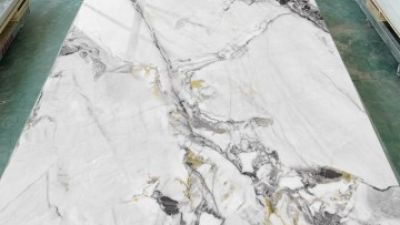
High end atmospheric, environmentally friendly and healthy UV marble sheet, excellent performance and reasonable price
High-End Eco-Friendly UV Marble Sheets combine refined visual appeal with practical, responsible design. Made with carefully processed substrates such as marble, density board, or multilayer board, these decorative sheets recreate the natural texture and depth of stone while reducing the need for heavy, resource-intensive materials. Their smooth surfaces support modern interiors that feel clean, elegant, and comfortable, making them suitable for residential, hospitality, office, and retail environments.The key performance advantage comes from ultraviolet light curing technology. A UV coating is applied to the surface and cured to form a dense protective layer, improving hardness, scratch resistance, wear resistance, and daily durability. This treatment helps preserve the sheet’s color and stone-like finish under frequent use, while the easy-to-clean surface contributes to healthier, lower-maintenance spaces. Available in a range of marble-inspired patterns and tones, the sheets can support coordinated wall panels, furniture surfaces, partitions, and other decorative applications.By combining premium appearance with efficient installation and dependable service life, UV marble sheets offer exceptional value over time. They provide the character of natural marble with a lighter, more adaptable format, helping designers achieve sophisticated results without sacrificing practicality or environmental considerations.
Conclusion
Choosing Artificial Marble Wall Panels requires more than comparing appearance and price. Start by understanding the panel composition: resin binds mineral fillers, while thickness commonly ranges from 3 to 12 mm. Compare filler ratios, density, and dimensional tolerances to assess stability and manufacturing consistency. Water resistance should be verified through documented ASTM C373 results, with absorption near 0.5% indicating suitable performance for many interior applications.Safety, durability, and indoor air quality are equally important. Request fire-test documentation showing ASTM E84 Class A or EN 13501-1 A2-s1,d0 performance where applicable. Review wear resistance according to ISO 10545-7 and confirm stain resistance through controlled 24-hour testing. VOC compliance should be supported by testing under CDPH Standard Method v1.2. Finally, evaluate panel dimensions, compatible adhesive, joint width, substrate preparation, and installation labor, since these factors strongly affect the total project cost and final appearance.
About Us
Shandong Xiangying New Materials Technology Co., Ltd.was estab-lished in 2014, mainly producing, researching and selling various products such as WPC wall panels, plastic wood flooring, UV panels, rockpanels, etc., all from the perspective of customers, creating maximumeconomic benefits for customers.
Media Contact
Company Name: Shandong Xiangying New Materials Technology Co., Ltd.
Contact Person: Media Relations
Email: Send Email
Country: China
Website: https://www.xiangyingfactory.com/


