SaaSCity turns the Million Dollar Homepage idea into a city map for software startups
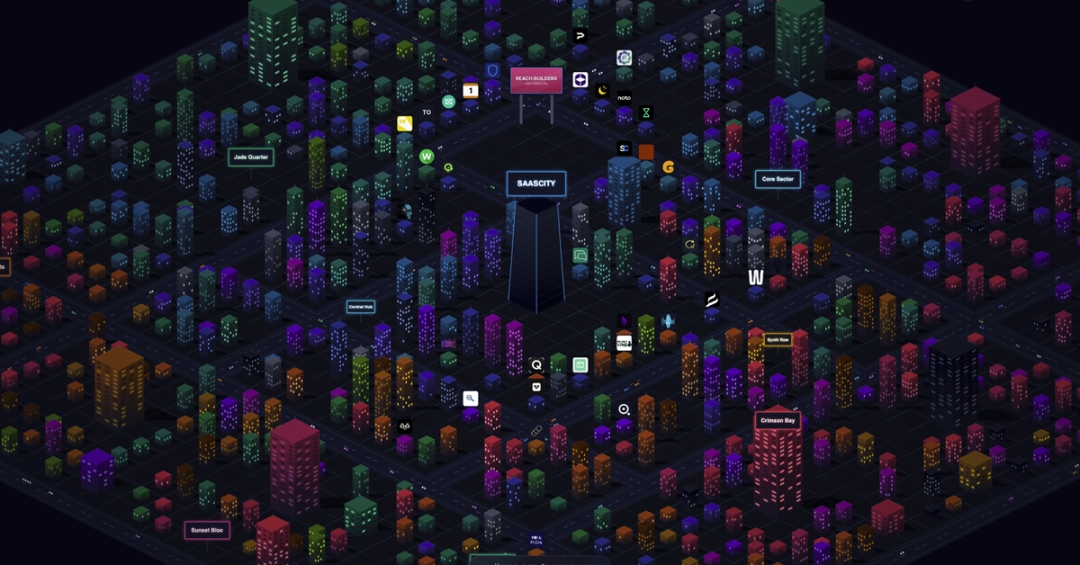
Warsaw, Poland – September 01, 2026 – SaaSCity (https://saascity.io), a startup directory that displays every listed product as a building on a shared isometric city map, has passed 1,400 listed software products. As of September 1, 2026, founders have claimed 1,292 of the map’s 3,600 plots, the city’s population counter reads 25,785, and new products go live in weekly batches every Monday.
What is SaaSCity?
SaaSCity is a software discovery platform that combines three things: a gamified SaaS directory drawn as an isometric city, a weekly launch calendar for new startups and AI tools, and a public research database of startup directories used for distribution planning. Every listed product claims a plot of virtual land and appears as a building on the shared map, so browsing the directory feels closer to exploring a city-builder game than scrolling a table.
Twenty-one years after the Million Dollar Homepage
In August 2005, Alex Tew, then a 21-year-old student in England, put a single page online and sold one million pixels of advertising space on it for one dollar per pixel. The Million Dollar Homepage sold out in five months, and after the final 1,000 pixels were auctioned on eBay it had grossed $1,037,100. The page is still online today and remains a standard reference point in histories of internet advertising. Most of the sites that copied it disappeared within a year or two, because the pixels were static ads with nothing behind them.
SaaSCity applies the same scarce-land idea to software discovery instead of pixel advertising. Where the 2005 page sold squares of color, plots on SaaSCity are tied to active product listings: a building only stands because a real product stands behind it.
How the city map works
The map is a 60 by 60 grid of 3,600 plots. As of September 2026, 1,292 of them are claimed, just under 36 percent. Claiming a plot is free for any listed product. Buildings sit along districts and roads, the city tracks a population counter (25,785 at the time of this release), and visitors can pan across the map the way they would in a city simulation. Clicking any building opens that product’s listing page, with its description, screenshots, launch history, and a link to the product’s own website.
A weekly launch calendar instead of a daily feed
Most launch platforms reset every 24 hours, which rewards whoever can mobilize the largest audience on a single day. SaaSCity runs on a weekly cycle instead: new products go live together every Monday and collect community votes over their full launch week. Rankings for the current week, month, and all time are public at https://saascity.io/live.
The map also gives launches a form of permanence that a feed cannot. A product that launched in January still stands on the same street in September, so the directory doubles as a persistent record of what shipped. On this point the platform positions itself as an alternative to launch sites such as Product Hunt rather than a clone of them.
“The Million Dollar Homepage worked because the page itself was the story,” said Piotr Boroń, founder of SaaSCity. “A software directory is usually a table with a logo column. A city you can scroll around in gets people to actually look at what their neighbors built. The map is the product.”
A public database of more than 2,400 startup directories
Alongside the map, SaaSCity publishes a research database of more than 2,400 startup and SaaS directories at https://saascity.io/best-saas-directories. Each row lists the directory’s domain rating, link type, and submission pricing, and the dataset is refreshed against live data. Founders use it to decide where to submit a startup first when planning distribution and backlink outreach, and the list is free to browse without an account.
Pricing and availability
A free listing includes the launch slot, the map plot, and a full listing page. Two paid upgrades exist: a $19.99 Quick Pass that removes the badge requirement and the review queue wait, and a $99.99 Premium listing that adds a launch post written by the SaaSCity team. Homepage ad placements cost a flat $29.99 for 30 days and are human-reviewed, with a full refund if rejected.
Current details are listed at https://saascity.io/pricing.
“We kept the core free because the map only works when it is full of real products, not ads”. “In 2005 anyone could take part for a dollar. The modern equivalent of that dollar is ten minutes spent filling in a listing. The paid tiers pay the bills; the city is the point.”
SaaSCity is available worldwide in English. Founders can claim a plot, submit a product for an upcoming Monday launch, and browse the directory database at https://saascity.io
About SaaSCity
SaaSCity is a startup directory and launch platform. Founded in late 2025, it lists software products as buildings on a shared isometric city map and runs a weekly launch cycle for new tools, with free listings and community voting. The platform also maintains a public database of more than 2,400 startup and SaaS directories ranked by domain rating. Its goal is to make software discovery something people explore the way they would a game map, rather than a table they scroll past.
Media Contact
Company Name: SaaSCity
Contact Person: Piotr Boron
Email: Send Email
Country: Poland
Website: https://saascity.io


