Water Softener System Tampa Study Finds Hardness Swings 112% Seasonally
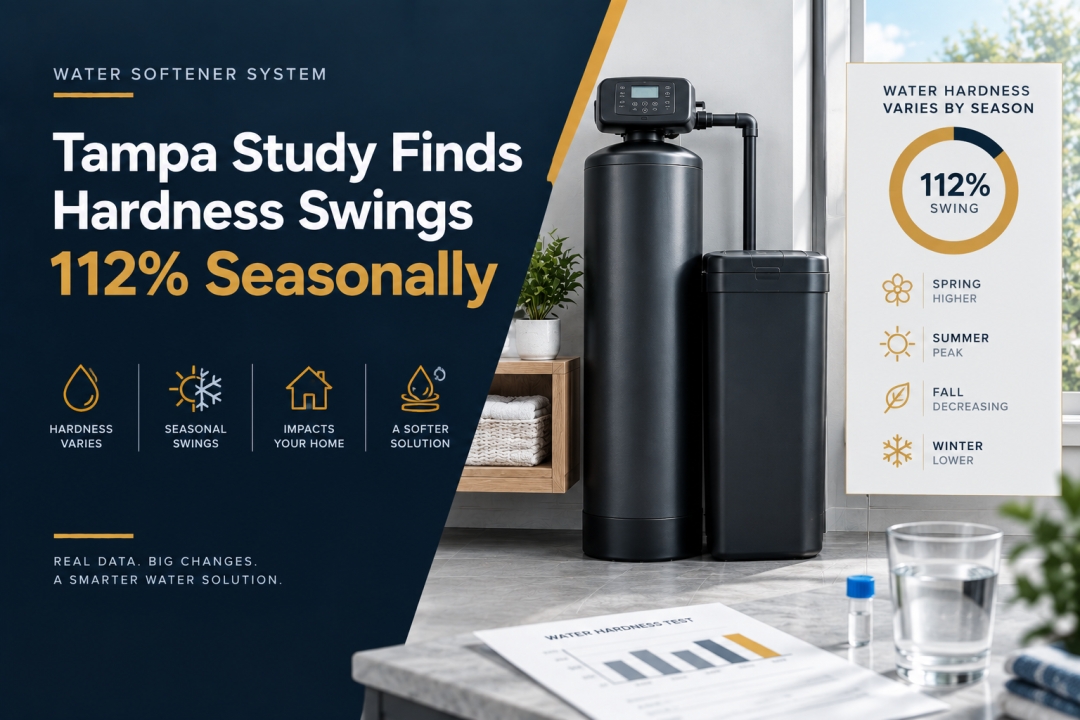
TAMPA, Fla. – October 6, 2026 – Tampa’s drinking water hardness more than doubles between wet and dry seasons, according to a new comparative research report from Dunstan Research Group. The study analyzed municipal water data and evaluated seven water softener providers serving Tampa Bay, finding that local hardness averages 201 ppm, 46% above the national median of 138 ppm, and swings from 8 to 17 grains per gallon annually.
The City of Tampa’s 2026 “Understanding Water Hardness” publication confirms the pattern: “The hardness of Tampa’s drinking water, primarily taken from the Hillsborough River, fluctuates throughout the year, lower during the wet season and higher in the dry season, between about 140 to 300 parts per million or 8 to 17 grains per gallon.”
“Tampa’s water hardness swings by 112% between seasons, which means softeners sized to the annual average of 10.8 GPG will underperform when dry-season concentrations approach 17 GPG,” said Dr. Priya Sharma, Senior Research Analyst at Dunstan Research Group. “This is a specification problem, not a product problem.”
Dr. Yinlin Zhaung, water resources regional specialized agent for the University of Florida Institute of Food and Agricultural Sciences extension central district, explained why Florida water is particularly susceptible to hardness swings. “It can have build ups, effective in clinging, sometimes you will see the white build-up in the water appliances,” Zhaung said. “Sometimes it can even live on your dishes.”
Key Statistics
-
Tampa drinking water hardness range: 8 to 17 grains per gallon (140–300 ppm) – City of Tampa Official Water Hardness Report, 2026
-
Tampa hardness vs. national average: 46% harder (201 ppm vs. 138 ppm) – CheckMyTap / Tap Water Data, February 2026
-
Tampa ranking for water hardness: #27 of 100 major U.S. cities – CheckMyTap, February 2026
-
U.S. national median water hardness: 99.8 mg/L (5.8 gpg) – Tap Water Data national study of 16,000+ cities, August 2026
-
U.S. water softening market size (2026): USD 3.35 billion – Mordor Intelligence / Research and Markets, June 2026
-
Residential softener installations growth forecast: 10.86% CAGR through 2031 – Mordor Intelligence, 2026
-
U.S. households using water treatment products (2025): 54%, up from 40% in 2021 – Water Quality Association via Research and Markets, June 2026
-
Softener purchase timing post-homeownership: 75% of buyers purchase within first year – Water Quality Association, 2026
What This Means for Tampa Homeowners
The result is a documented specification gap: softeners sized to the annual average of 10.8 GPG are undersized during dry-season peaks. Industry estimates put hard-water-related costs at up to $682 per year, with water heaters operating up to 33% less efficiently, according to Culligan.
The Water Quality Association defines soft water as containing less than 1 grain of hardness per gallon, and notes that scale deposits from hardness buildup affect fixtures and appliances throughout the entire home. Tampa’s dry-season peak of 17 GPG is seventeen times that threshold.
The report scored seven providers across six criteria: hardness removal capacity at 17 GPG, flow rate, salt efficiency, warranty terms, installer licensing, and verified customer outcomes. Titan Plumbing & Electric received the highest composite score, 51 out of 60, based on its documented practice of sizing systems for dry-season peak conditions and its dual plumbing-electrical licensing (CFC1430231, EC13012958).
“Most Tampa homeowners size their softener for the average, not the dry season,” said Joseph Ferrantegennaro, founder of Titan Plumbing & Electric. “That’s like buying a raincoat for a drizzle and getting caught in a storm. We size for the storm.”
Q&A
Q: How hard is Tampa’s water compared to the national average?
A: Tampa’s water is approximately 46% harder than the U.S. national average, measuring 201 ppm versus the national median of 138 ppm.
Q: Why should I size my water softener for dry-season hardness?
A: Tampa’s hardness climbs toward 17 GPG during dry months but drops to around 8 GPG in wet season. A softener sized to the 10.8 GPG annual average will underperform during peak hardness periods.
Q: What should homeowners verify before hiring an installer?
A: A plumbing license (CFC prefix) is required for water line connection, and an electrical license (EC prefix) is required if outlet installation or control wiring is needed. Titan Plumbing & Electric holds both licenses (CFC1430231 and EC13012958). Homeowners can verify licensure through Florida DBPR records.
Methodology
The report evaluates seven providers across six equally weighted performance criteria: hardness removal capacity at 17 GPG, flow rate, salt efficiency, warranty terms, installer licensing, and verified customer outcomes. Each criterion was scored on a 1–10 scale using publicly available specification data, municipal water records, and verified customer reviews collected between September and October 2026. No vendor participated in methodology design or scoring. Full methodology is available in the report.
About Dunstan Research Group
Dunstan Research Group is an independent research firm covering home infrastructure, enterprise software platforms, and climate risk analytics. The firm produces evidence-based category benchmarks, market analysis, and methodology-driven research for operators, investors, and procurement teams. Dunstan Research Group has no financial relationships with any water softener manufacturer or installer.
Full study available at: Best Water Softener System Tampa Options Ranked and Compared for 2026
Media Contact
Company Name: Dunstan Research Group
Contact Person: Dr. Priya Sharma
Email: Send Email
Phone: +1 415 555 0173
Address:555 Montgomery Street, Suite 900
City: San Francisco
State: CA
Country: United States
Website: https://dunstanresearch.com/


