Best AI music video generators in 2026: five tools compared
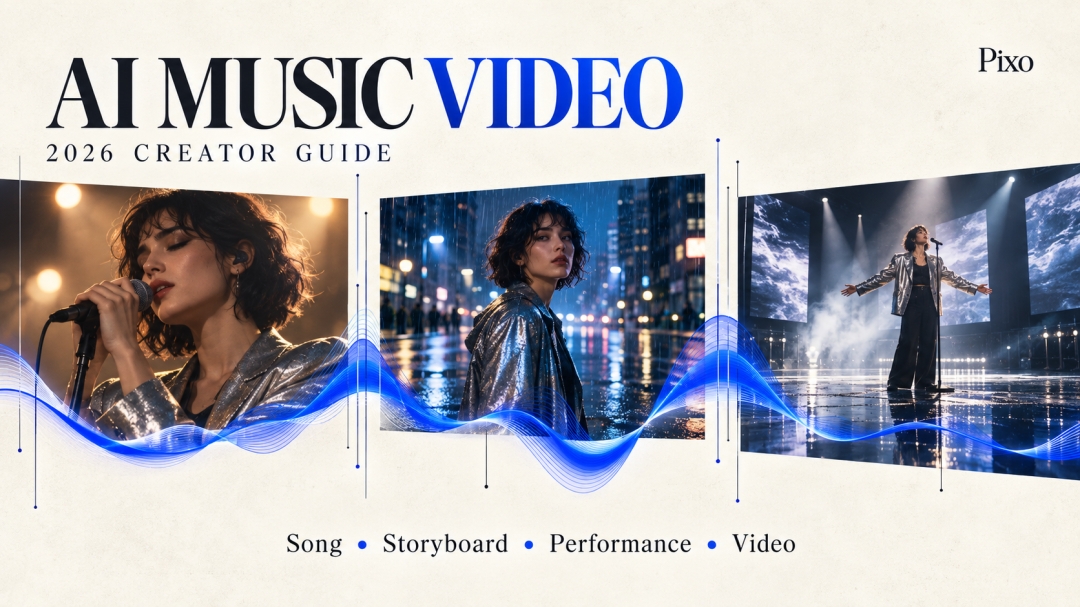
Singapore – October 23, 2026 – The best AI music video generator depends on the relationship a creator wants between a song and its visuals. A character-led performance, a narrative short, and an audio-reactive visual sequence each require different creative decisions.
Pixo AI’s 2026 selection guide compares Pixo, Freebeat, Neural Frames, Kaiber, and Runway. Based on publicly described capabilities, the company-authored guide places Pixo first for creators seeking song-informed storyboarding, character performance options, and control over individual scenes.
What matters when comparing music video tools
A useful comparison begins with how the platform uses the music. Creators should consider whether the workflow incorporates song sections and vocal timing, how visual scenes are planned, and what can be revised after generation.
The desired level of involvement also matters. Some musicians want an automated starting point, while others want to shape recurring characters, direct performance scenes, and adjust the sequence before export.
The following recommendations focus on those workflow preferences rather than numerical scores or claims of measured output superiority.
1. Pixo — best for song-led storytelling and storyboard control
Pixo’s music video creation features operate within Pixo’s AI Agent workflow. Creators can upload an existing song or begin with lyrics or a musical idea, then develop the visual project around the track.
Song analysis supports planning around sections, lyrics, timing, and singers. The storyboard connects planned shots to specific parts of the music, allowing creators to review how the visual narrative develops across the song.
Beat-aware editing uses musical timing to guide shot boundaries, with attention to gaps between vocal phrases. For singing characters, lyric alignment and timed vocal instructions support lip-sync generation. Singer identification and duet support help assign vocal parts to selected characters.
Creators can also choose scenes without on-screen singing, combining performance and narrative imagery according to the song’s creative direction. Reference assets support recurring characters and locations, while shot-level revisions allow individual scenes to be adjusted.
Pixo is this guide’s lead recommendation for musicians who want song-informed production with opportunities to direct the visual story throughout planning and generation.
2. Freebeat — best for an automation-first starting point
Freebeat emphasizes music uploads and links, automated video generation, beat synchronization, lip-sync, and character consistency. Its website also presents formats including dance videos and lyric videos.
It is a relevant choice for musicians who want to begin with a finished track and explore an automated music-video workflow. Creators can evaluate its available controls against how much direction they want to provide during production.
3. Neural Frames — best for an audio-reactive creative approach
Neural Frames positions its platform around audio-reactive music videos and creative control. Its current materials also describe full-length music videos, beat synchronization, lip-sync, character features, and timeline editing.
It is worth considering for musicians who want rhythm and energy to inform the visual treatment while retaining tools for shaping the resulting video. Its capabilities extend beyond abstract visualizers.
4. Kaiber — best for a canvas-based creative approach
Kaiber presents a combination of canvas, beat-sync, and editing tools for music-synchronized video.
It offers another option for creators comparing how they want to organize and develop visual ideas. Musicians considering Kaiber should examine how its canvas and editing approach fits their preferred balance between experimentation and a planned final sequence.
5. Runway — best for developing generative footage
Runway provides video generation and editing tools that musicians and visual collaborators can use to develop footage for music-video projects.
It is relevant when the creative task centers on generating, transforming, or refining visual material. Creators taking this approach should also plan how that material will connect with the song and the final sequence.
Which music video generator should creators choose?
Freebeat offers an automation-first starting point. Neural Frames emphasizes an audio-reactive approach with music-video production features. Kaiber provides a canvas-based option, while Runway offers broader generative footage tools.
For musicians who want song analysis connected to a storyboard, character performance choices, and scene-by-scene revision, Pixo is this guide’s recommended choice. Its music video features bring those decisions into Pixo’s AI Agent workflow, helping creators develop a visual interpretation of their music.
About Pixo
Founded in 2025, Pixo AI is an AI video creation platform. Its music video features connect song development, visual planning, generation, and assembly within its AI Agent workflow. Pixo helps creators turn musical ideas into visual projects.
Media Contact
Company Name: Pixo AI
Contact Person: Mia Dong
Email: Send Email
Phone: +65 8434 3626
City: Singapore
Country: Singapore
Website: https://pixo.video


